ServicesFoam Roofing
Foam Roofing in Carefree
Spray foam gives a flat roof one continuous, insulating layer with no seams for water to find. We install new foam systems, recoat tired ones and fix punctured spots, and we tell you plainly which of those your home actually needs.
What a foam roof does, and when it makes sense
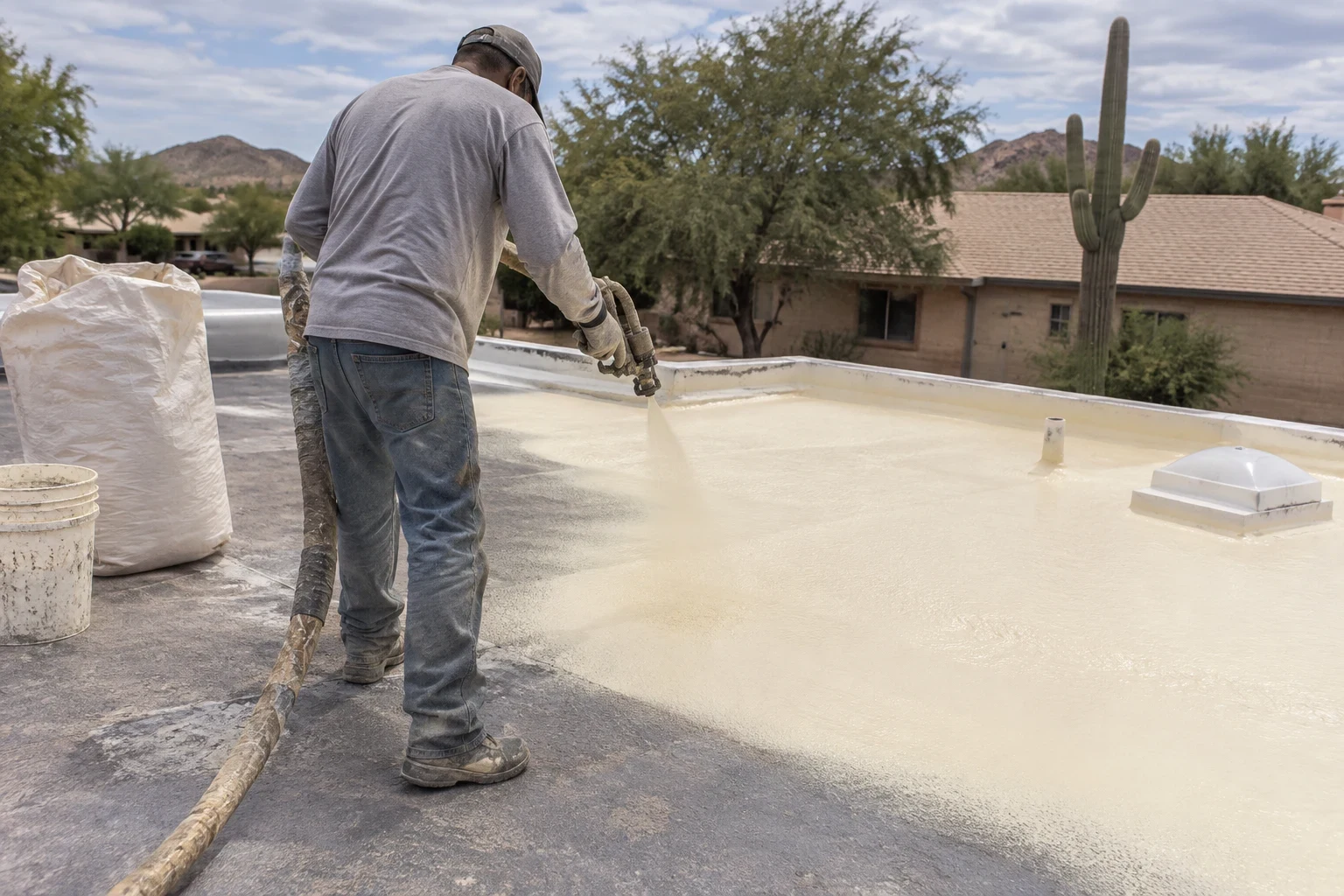
Spray polyurethane foam goes on as a liquid, expands within seconds and cures into a firm, lightweight layer that follows every curve of the deck, parapet and drain. It is sprayed to build slope toward the scuppers, so water moves off instead of sitting. On top goes an elastomeric coating, usually acrylic or silicone, which is the part that faces the sun. The foam does the waterproofing and insulating. The coating protects the foam.
Foam is usually the right call for flat and low-slope roofs, especially homes with parapet walls where the roof hides behind the stucco. If your roof is pitched and covered in tile or shingles, our tile roofing and shingle roofing pages are a better fit. If you are not sure what you have, that is a fine place to start the phone call.
When a storm has just passed, the sensible first step is simple: find out whether the coating was broken. A few small hail dents in the coating are a quick fix. Bare foam left to bake in the sun all summer is not.
What our foam roofing work includes
- 01
New spray foam systems
We prepare the deck, spray foam to the planned thickness and build slope toward the drains. The coating then goes on in more than one pass so the finished layer is even across the whole roof.
- 02
Recoating an existing foam roof
Coatings wear thin over the years. We clean the surface, repair any soft or damaged foam, and apply a fresh coat before the foam underneath starts to break down.
- 03
Spot repairs after hail or wind
Punctures, bird pecks and torn coating around equipment get cut out, filled with fresh foam and recoated so the patch blends into the rest of the roof.
- 04
Parapets, scuppers and penetrations
Most leaks start where the roof meets a wall, a drain or an AC stand. We carry the foam up the parapet and seal around every vent and pipe.
- 05
Coverage you can hold on to
As an Arizona KB-2 licensed contractor, we stand behind our foam work with a 10-year labor warranty. The foam and coating materials are backed by a 30-year manufacturer warranty through roofing material providers.
Questions about Foam Roofing?
Call(480) 568-3615Signs your foam roof needs attention
Chalky or worn coating
If the surface rubs off white on your hand or you can see the tan foam showing through, the coating is near the end of its life. This is the best time to recoat.
Brown, crumbly patches
Foam that has lost its coating darkens and turns powdery in the sun. Those spots need to be cut back to sound foam and rebuilt.
Small holes or dents after a storm
Hail and blown debris can pierce the coating. Each hole lets water and sunlight into the foam, so it is worth a look soon after a storm passes.
Water standing for days
A little ponding that dries in a day is normal. Water that lingers points to low spots that need foam added to restore drainage.
Blisters or soft spots
Raised bubbles or areas that feel spongy underfoot often mean moisture got trapped. We open them up to see what is going on before deciding on a fix.
Stains on interior ceilings
A ceiling stain under a flat roof usually traces back to a parapet seam or a penetration, not the middle of the roof.
How a foam roofing job runs
- 1
We talk on the phone first
Tell us what you are seeing and when it started. We ask a few questions about the roof's age and any recent storms, then set a time to come out.
- 2
We look and explain
We walk the roof, take photos of what we find and show them to you. You get a written estimate that separates repairs, recoating and any new foam.
- 3
We schedule around the weather
Foam needs a dry surface and calm air to spray well, so we plan around wind, morning dew and the monsoon season. If conditions turn, we wait rather than rush it.
- 4
Job day
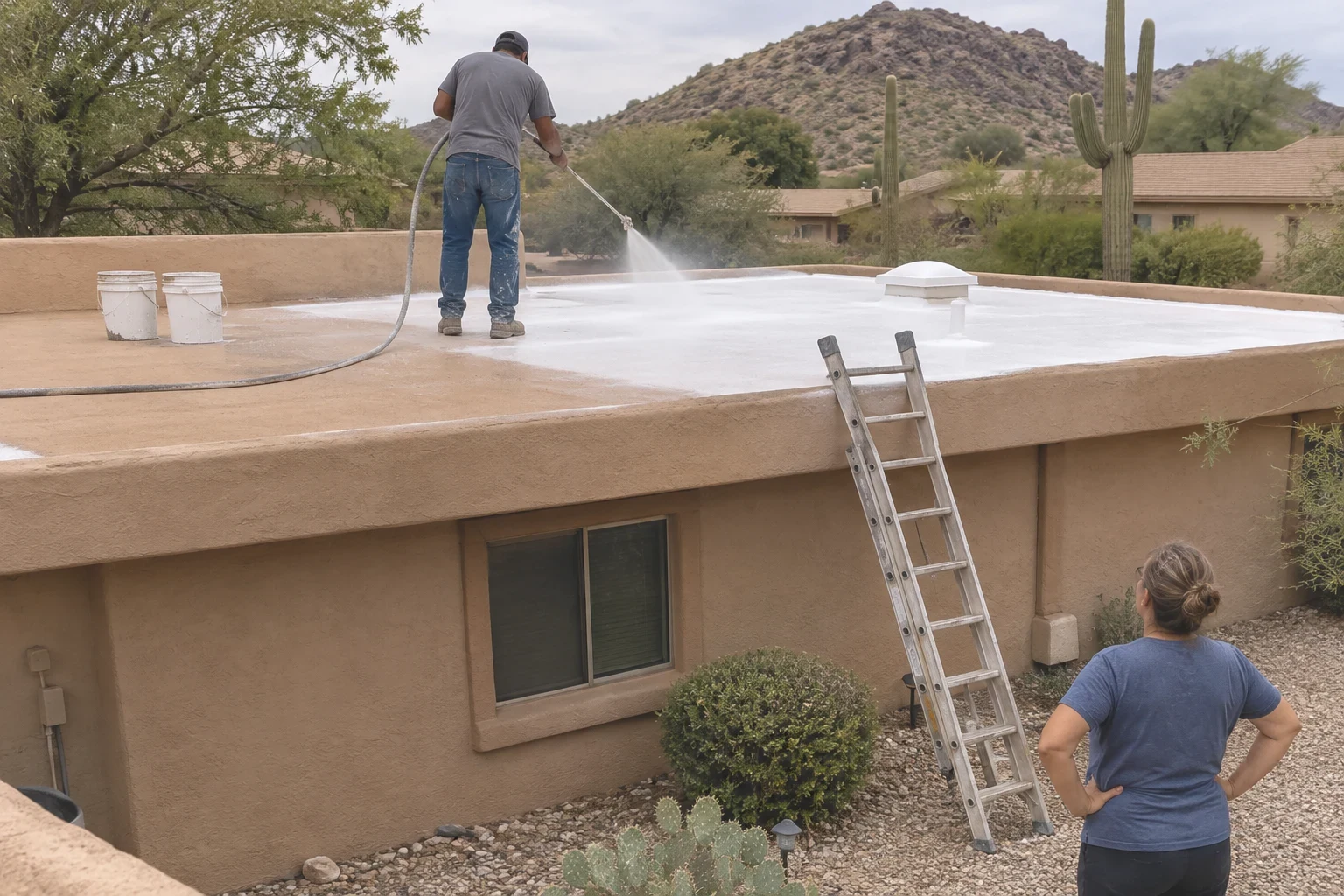
We cover windows, cars and anything near the walls to guard against overspray, then prep, spray and coat. Most of the work happens on the roof, so you can stay home.
- 5
Cleanup and walk-through
We remove the masking, pick up debris and go over the finished roof with you, including when a future recoat will be due.
What moves the cost of foam roofing
Every foam roof is priced from its own measurements and condition, so we don't quote a number before we've seen it. These are the things that make the biggest difference, and we'll walk you through each one on your estimate.
- Roof size and shape
- Square footage sets the amount of foam and coating. Lots of parapets, corners and penetrations add hand work.
- Recoat or new system
- A recoat over healthy foam costs far less than a new system. Waiting until the foam itself is damaged usually pushes the job toward the bigger option.
- What's underneath
- If the old roof is wet or failing, it may need to come off before foam goes down. If it is dry and sound, foam can often go right over it.
- Coating and thickness
- Silicone and acrylic coatings differ in price and how they handle ponding water. Thicker foam adds insulation and material cost.
Foam roofing questions
How long does a foam roof last?
The foam itself can last decades if the coating stays intact. The coating is what wears, so plan on recoating every several years depending on its type and thickness. Keeping up with recoats is the main thing that makes a foam roof last.
Can you spray foam over my existing flat roof?
Often, yes, as long as the old roof is dry and well attached. We check for trapped moisture first. Wet material has to come off, because foam sealed over a wet roof leads to blisters later.
Hail hit my roof last night. What should I do first?
Stay off the roof and look from the ground or a window for torn coating or debris. Then give us a call so we can come look at the surface. Small punctures are a simple repair if they're sealed before the foam is left exposed for long.
Is the spray safe for my family and pets?
We ask that windows near the work area stay closed and pets stay inside during spraying. The foam cures quickly, and once it's coated the roof is inert. We'll tell you exactly what to expect for your home before the day.
Does foam help with summer heat?
It does. Foam adds a continuous layer of insulation, and a light-colored coating reflects a lot of the sun. Many homeowners notice upstairs rooms stay cooler after the work.
Get a straight answer on your foam roof
Tell us what the roof looks like and what's been happening. We'll come out, show you photos and give you a written estimate for a repair, a recoat or a new foam system.